Equipment guide
How to choose rental skis for the season
Level, type of ski, length and boots: what to decide before you rent for the whole winter, and what to check when you collect your equipment.
ren-to editorial team · Updated · 10 min read
First of all: what’s your level?
Your level is the first question a rental shop asks, and the one people answer worst. It isn’t there to make you feel good: from it the shop chooses the family of ski, the length and how to set the bindings. An inflated level means a ski you can’t turn and a binding that releases later than it should.
| Level | What you can do | Where you ski |
|---|---|---|
| Beginner | You slow down in a snowplough and link your first turns | Nursery slopes, blue pistes |
| Intermediate | Parallel turns, including skidded ones; you control your speed | Blue and red pistes |
| Advanced | Turns on the edges (carving), comfortable at speed | Reds and blacks, mixed snow |
| Expert | Any slope and any snow, moguls and off-piste included | Everywhere |
Which type of ski: piste, all-round, all-mountain, freeride, park
There’s no official classification: some talk of four categories, some of three, and some add ski touring as a fifth. The one shops use goes mainly by the width of the ski: the narrower it is, the quicker it goes from edge to edge on groomed snow; the wider it is, the better it floats in fresh snow.
| Family | Width | For | Snow |
|---|---|---|---|
| Piste (race carve, slalom, giant slalom) | 65-75 mm | Advanced and expert skiers after precision | Groomed, even hard |
| All-round | 70-80 mm | From beginner to advanced: most skiers | Piste |
| All-mountain | 85-100 mm | Intermediate and advanced skiers who also leave the piste | Piste and fresh snow |
| Freeride | Over 100 mm | Experts in fresh snow | Off-piste |
| Freestyle (park) | 75-90 mm, with raised tails | Anyone jumping and spinning in the snowpark | Park |
All-round or all-mountain?
This is the most common question, because the names are so alike. In Italy an all-round ski is an easy, forgiving piste ski, narrow (70-80 mm), that does both short and medium turns. An all-mountain ski is wider, has a raised tip (rocker) and suits people who alternate between the piste and fresh snow at its edge. If you nearly always ski on groomed pistes, often with artificial snow that’s hard in the morning as in most Lombardy resorts, an all-round is the right choice.
Camber, rocker and radius, in brief
How long your skis should be
Length is worked out from your height and shifts with your level: shorter turns more easily, longer is more stable at speed. For a piste or all-round ski the range goes from 15 cm less than your height, for beginners, to 5 cm more, for strong skiers.
| Height | Beginner | Intermediate | Advanced |
|---|---|---|---|
| 150 cm | 135-145 | 140-150 | 145-155 |
| 155 cm | 140-150 | 145-155 | 150-160 |
| 160 cm | 145-155 | 150-160 | 155-165 |
| 165 cm | 150-160 | 155-165 | 160-170 |
| 170 cm | 155-165 | 160-170 | 165-175 |
| 175 cm | 160-170 | 165-175 | 170-180 |
| 180 cm | 165-175 | 170-180 | 175-185 |
| 185 cm | 170-180 | 175-185 | 180-190 |
| 190 cm | 175-185 | 180-190 | 185-195 |
| 195 cm | 180-190 | 185-195 | 190-200 |
Three things move you within the range:
- Your weight: if you weigh more than average for your height, go towards the longer size; if you weigh less, towards the shorter.
- The type of ski: a slalom ski should be shorter (even 10-15 cm under your height), an all-mountain with rocker 5 cm longer, a freeride up to 10 cm over your height.
- Your style: if you make short turns and ski slowly, stay at the bottom of the range; if you make wide turns and go fast, at the top.
American manufacturers’ charts give sizes 5-10 cm longer for intermediates and experts: they have in mind all-mountain skis with rocker, which ski “shorter” than they measure. On charts for women the sources disagree: some recommend a few centimetres less, others the same size with a lighter ski. The shop has its sizes lined up in steps of a few centimetres, and takes the one closest to yours.
Children: between chest and nose
For children the rule changes: the ski reaches between the chest and the nose, towards the chest for beginners or light children, towards the nose for those who already go fast. Never a longer ski “to grow into”: a child can’t turn it.
| Age | Height | Ski |
|---|---|---|
| 4 years | about 100 cm | 80-90 |
| 6 years | about 115 cm | 95-105 |
| 8 years | about 125 cm | 110-120 |
| 10 years | about 140 cm | 120-130 |
| 12 years | about 150 cm | 135-145 |
Boots: the choice that matters most
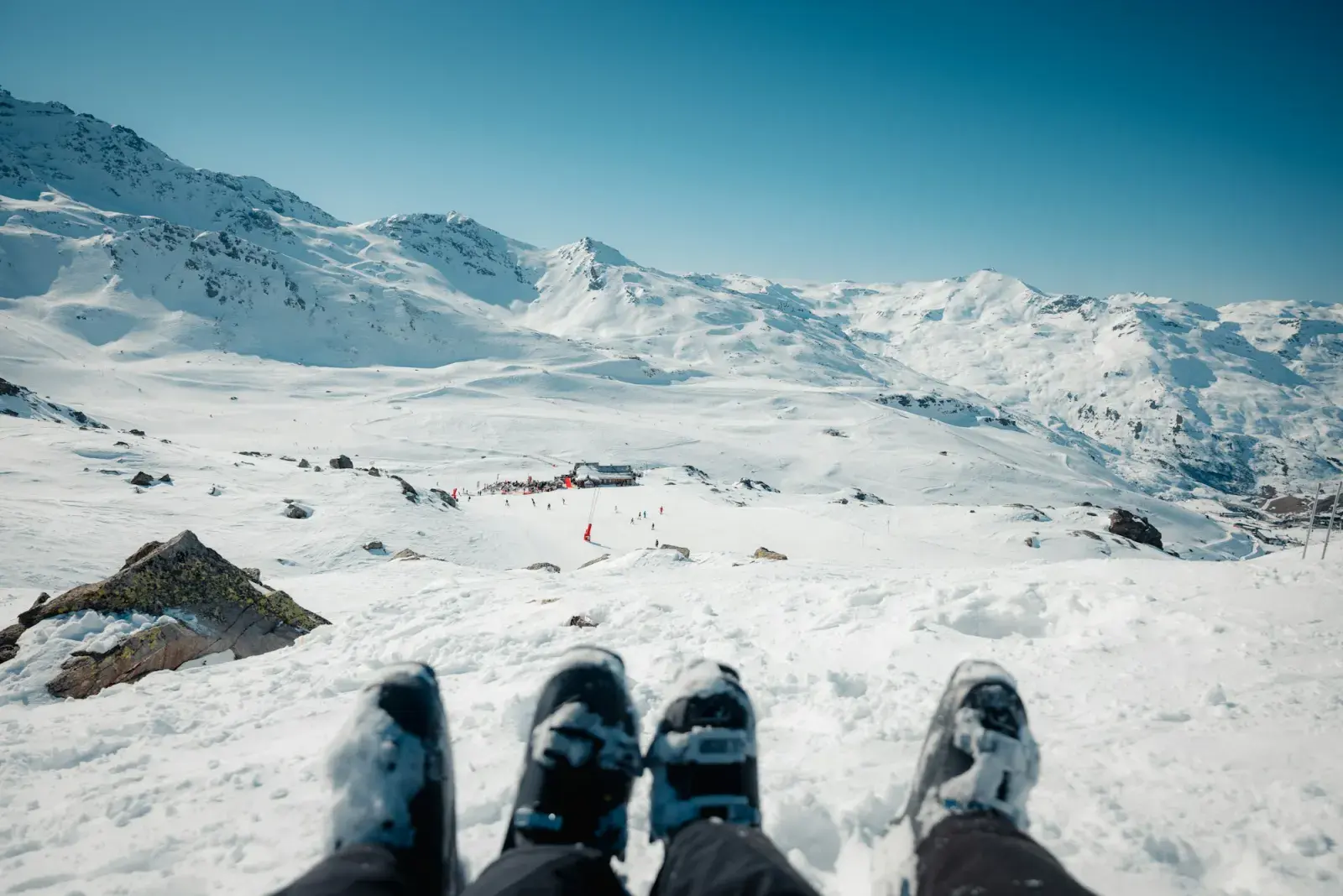
You can still ski on a ski that isn’t perfect. A boot that doesn’t fit, on the other hand, can ruin your day. And if you keep it for the whole season, it can ruin every outing.
Ski boot size is given in Mondopoint, which corresponds to the length of your foot in centimetres. To measure it, stand with your heel against the wall and measure the distance to the tip of your longest toe. Repeat on both feet and go with the longer one. Shops also work in EU sizes, not UK ones, so have your EU size to hand.
- Wear a single pair of thin technical socks. Avoid cotton and don’t layer two pairs.
- Buckle the boots carefully: start with the buckles over the instep, move on to those on the cuff and finish with the strap at the top.
- When you stand up, your toes may brush the tip. When you bend your knees as you would on skis, they should move back slightly, while your heel should stay put.
- Keep the boots buckled for at least 10-15 minutes: give the inner liner time to warm up and settle.
- If you feel a pressure point already in the shop, try another model. On the snow that discomfort is unlikely to go away.
A boot’s stiffness is called its flex, and it’s written on the cuff. There’s no standard between brands, but these are the rough figures:
| Level | Men | Women |
|---|---|---|
| Beginner | 60-90 | 60-70 |
| Intermediate | 90-110 | 70-90 |
| Advanced and expert | over 110 | over 90 |
Plastic stiffens in the cold: a boot that seems soft in the shop is less so on the piste. Between two sizes, manufacturers advise the smaller one, because the liner stretches with use.
Bindings and DIN: what to tell the shop
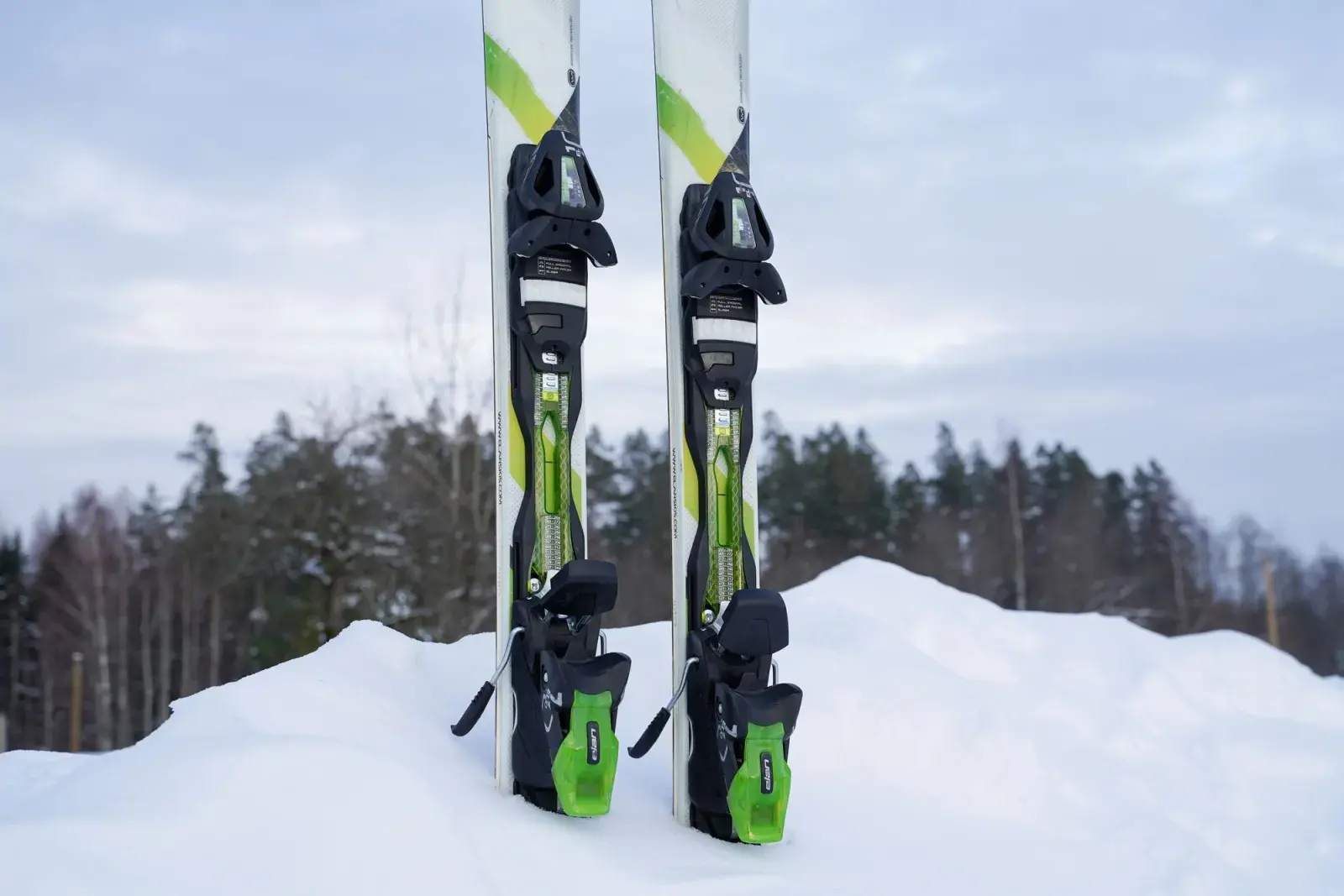
Bindings have to hold the boot while you ski and release it when the forces become excessive. The number you see on the binding, often called the DIN, shows the release setting. To set it, the staff will ask for your weight, height, age, skiing level and boot sole length, in millimetres. That’s why those questions at the counter are so precise.
The skier type describes how you usually ski:
- Type 1: you ski cautiously, at moderate speed and on easy pistes.
- Type 2: you ski at moderate speed on pistes of varying difficulty.
- Type 3: you ski fast and assertively, including on steep pistes.
Describe honestly how you ski and give your correct weight: the setting also takes your age into account. If you rent skis for 15 days or more, as with a seasonal rental, ask the shop for a summary of the setting and of the checks carried out.
Why seasonal rental skis deserve a closer look
For a weekend, a ski you feel comfortable on is enough. If you’re going to use it all season, it’s worth also thinking about how you’ll be skiing in a few months: with experience you may need something different. Here are four things to consider.
- Your progress. If by the end of last season you were already skiing parallel, you can look at the more advanced end of the models for your level. But avoid a ski that’s too stiff: if you struggle to control it, it’ll end up tiring you out.
- The snow you ski most often. If you mostly stay on groomed pistes, perhaps hard in the morning, look for a ski with good grip in the turns. An all-round model designed for the piste can serve you better than a wide all-mountain ski you wouldn’t use to the full.
- Children growing. Ask whether the rental includes a size swap during the season, especially for boots. Choosing them bigger “to make them last” compromises the fit.
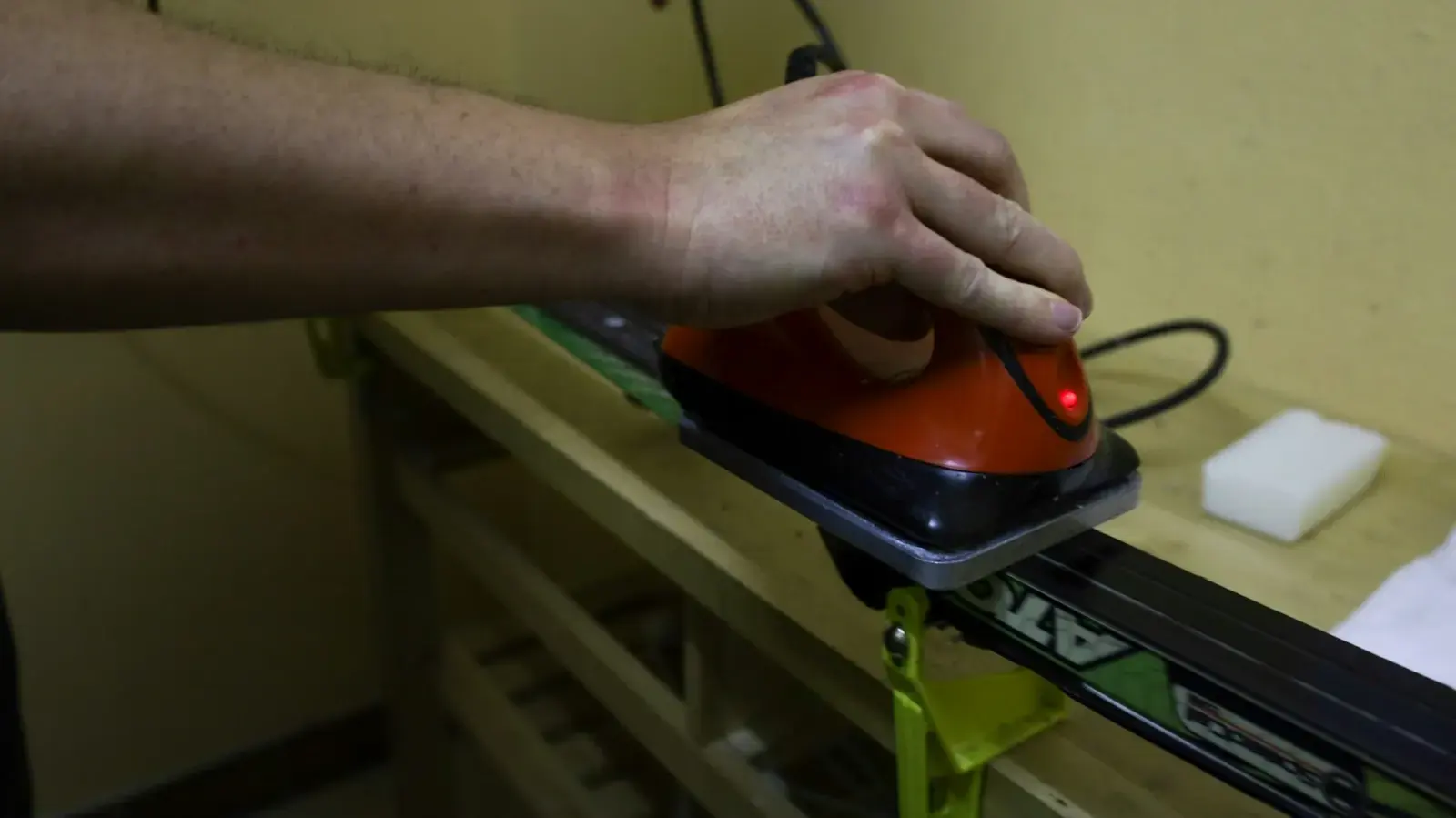
- Maintenance. Wax and edges need checking during the season, especially if you ski often on hard or artificial snow. Before choosing a rental, ask which services are included in the price.
What to check at pick-up and return
Before you leave the shop, spend a few minutes on the equipment:
- Edges: check there are no nicks or other obvious damage.
- Base: look for deep scratches or repairs worth pointing out.
- Sizes: check that the ski length and boot size are the ones you agreed.
- Bindings: have the staff check that they’re set for your boots and that the values match the setting sheet.
- Ski brakes: ask them to check that they work properly.
- Photos: photograph bases and edges at pick-up and at return. Also ask which marks count as normal wear and which count as damage.
Remember two rules for Italian pistes: a helmet is compulsory for adults too, and anyone using alpine ski pistes must have third-party liability insurance for damage caused to others. If you don’t have a helmet, check whether it’s included in the “complete” package you choose on ren-to, or add it to your rental.
What if you snowboard?
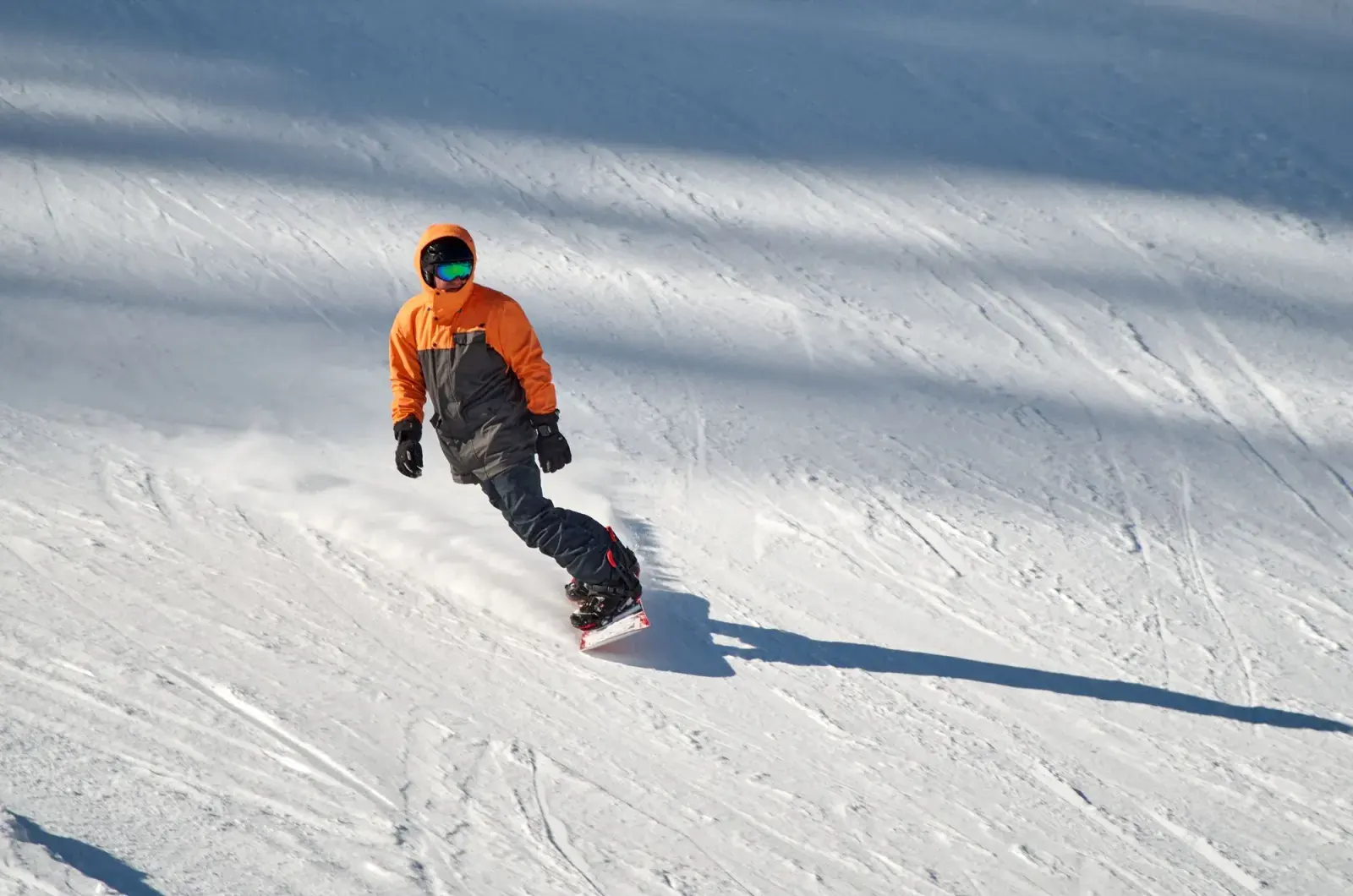
To choose the length of your board, start from your weight, then consider height, level and style. For an all-mountain board, one that reaches about your chin is a starting point: if you’re a beginner you may be better off with a slightly shorter board, while for freeride you may need a longer one.
Width matters too. If you wear EU 44 or larger, ask them to check that the toe and heel of your boots don’t stick out too far from the board. Finally, try the boots properly: your heel should stay put when you bend your knees.
Frequently asked questions
How do you know which skis are right for you?
Start from your level: it decides the family of ski (for the piste an all-round 70-80 mm at the waist suits most skiers) and the length, from 15 cm less than your height for a beginner to 5 cm more for an advanced skier. Then your weight and style shift it by a few centimetres.
What are the 4 categories of ski?
There’s no official classification, but people usually distinguish piste skis (race carve, slalom, giant slalom), all-round or all-mountain, freeride and freestyle. Ski touring is often counted separately.
What’s the difference between all-round and all-mountain skis?
An all-round is an easy, narrow piste ski, 70-80 mm at the waist, for short and medium turns. An all-mountain is wider, 85-100 mm, with a raised tip, and also works in fresh snow off the piste. If you nearly always ski on the piste, you’re better off with an all-round.
How long should skis be for a beginner?
15 to 5 cm less than your height: for someone 170 cm tall, skis of 155-165 cm. A shorter ski turns more easily, and that’s what you need to learn.
Do you get a helmet when you rent skis?
It depends on the package: a helmet is often rented separately, in other cases it’s included, especially for children. Since the 2025-26 season it has been compulsory for everyone on the pistes in Italy. On ren-to the “complete” package includes boots, poles and helmet.
How often should seasonal rental skis be waxed?
Roughly every 3-4 days of skiing, with an edge check every 5-7 days if you ski often on artificial snow. Before you sign, ask whether services during the season are included.